
Electrical Engineering colleges in Johannesburg
- Home
- Electrical Engineering colleges in Johannesburg
Electrical Engineering Course in Johannesburg
Greenview College offers an accredited Electrical Engineering programme designed to prepare students for rewarding careers in the engineering industry. Our NATED N1–N6 qualification combines classroom learning with practical training, giving students the technical knowledge and hands-on experience employers value. With experienced lecturers, modern facilities, and recognised qualifications, we help students build successful careers in electrical engineering.
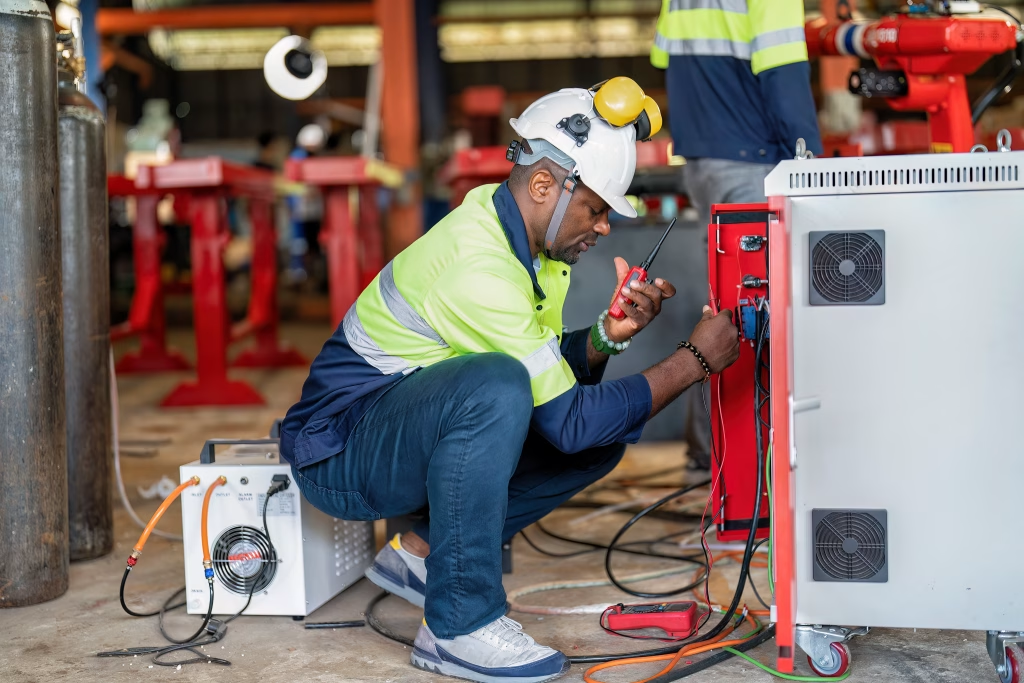

Why Choose Greenview College?
Choosing Greenview College means studying at an accredited institution that focuses on practical skills and industry readiness. Our Electrical Engineering programme combines theoretical knowledge with hands-on training, helping students gain confidence before entering the workplace.
Benefits include:
- Accredited NATED N1–N6 qualification
- Practical workshop training
- Experienced engineering lecturers
- Affordable tuition fees
- Flexible study options
- Career guidance and student support
- Nationally recognised certification
Course Structure and Overview
The NATED N1–N6 Electrical Engineering programme follows a structured learning path that combines theory with practical training. Students develop essential technical skills at each level while preparing for employment in the engineering industry. As they progress through the qualification, they gain the confidence and experience needed to work safely and effectively in real-world environments.


N1-N2: Laying the Foundation
The initial stages of the program focus on building a solid foundation in electrical engineering. Students begin with core subjects, including mathematics, engineering science, and electrical trade theory. These subjects provide a strong base for more advanced study at higher levels.
N1 Modules:
- Mathematics
- Engineering Science
- Electrical Trade Theory
- Industrial Electronics/Engineering Drawings
N2 Modules:
- Mathematics
- Engineering Science
- Electrical Trade Theory
- Industrial Electronics/Engineering Drawings
These foundational subjects ensure students understand core electrical engineering concepts, equipping them to move on to more specialized topics.
N3-N6: Advancing Knowledge and Specialization
N3 Modules:
- Mathematics
- Engineering Science
- Electrotechnology
- Industrial Electronics
N4 Modules:
- Mathematics
- Engineering Science
- Electro-Technics
- Industrial Electronics
N5 Modules:
- Mathematics
- Power Machines
- Electro-Technics
- Industrial Electronics
N6 Modules:
- Mathematics
- Power Machines
- Electro-Technics
- Industrial Electronics
This specialized curriculum ensures students develop a comprehensive understanding of electrical engineering, preparing them for complex roles in the industry.



Practical Training Opportunities
Hands-on experience is a key component of electrical engineering education. Therefore, students in this program have the opportunity to complete practical training after specific levels, ensuring they are well-prepared for real-world applications. This training includes both beginner and advanced levels, allowing students to develop essential skills progressively.
Level 1 Practical Training (120 Hours)
After completing N1 or before moving on to N3, students participate in 120 hours of practical training, which provides them with direct experience in essential electrical tasks. The practical training covers:
- Single-Phase Electrical Systems: This includes installation and wiring of premises, interpreting diagrams, and system testing.
- Hand Tool Training: Students practice using essential tools such as grinders, drills, and wrenches.
- Basic Arc Welding: Introduction to welding techniques, which are vital for electrical systems assembly.
Students receive a certificate and logbook documenting their practical skills after completing this phase.
Advanced Practical Training (N4-N6)
At the N4-N6 levels, students engage in more advanced practical training to prepare them for industrial environments. Key skills covered include:
- Cutting, Drilling, and Thread Tapping: Precision tasks using specialized tools.
- Pipe Threading and Plate Rolling: Advanced techniques for industrial applications.
- Welding and Assembly: Mastery of advanced welding methods for complex electrical projects.
This advanced training ensures students are prepared for the demands of high-level electrical engineering tasks in industrial settings.
Career Opportunities After Graduation
Graduates of the Electrical Engineering program are well-equipped to pursue a variety of career paths. With the growing demand for electrical engineers, job prospects are strong across various sectors. Some of the career options include:
- Electrical Engineer
- Industrial Electronics Technician
- Power Systems Engineer
- Electrical Installation Specialist
- Maintenance Engineer
- Electrical Design Engineer
As industries continue to expand, electrical engineers will remain in high demand, making this an excellent career choice.
Summary
Start Your Engineering Career at Greenview College a comprehensive educational experience that combines theoretical coursework with practical, hands-on training. Students gain the knowledge and skills necessary to succeed in the rapidly growing electrical engineering field. With strong job prospects and a wide range of career opportunities, pursuing a degree in electrical engineering is a valuable investment for the future.

- Electrician
- Electric fitter
- Electric engineer
- Master electrician
- Electro-technician
- Millwright
- N1 Entry Requirement: Grade 9 (Std 7) Certificate with a pass in Mathematics and Physical Science OR no formal qualification for everyone 23 years or older.
- N3 Entry Requirement: Grade 11 (Std 9) Certificate with a pass in Mathematics and Physical Science or N2.
- N4 Entry Requirement: Matric/Grade 12 (with full mathematics and science 40%+ Pass rate), or N3 Pass (with mathematics and science)
NOTE: Proceed to the next level only when the previous level has been successfully completed i.e. N4 for N5, etc.
Upon completion of every level, a certificate will be issued from the Department of Education. A Diploma will be issued by the Department of Education on completion of N6 as well as two (2) years on the job training/attachment in the relevant industry.
The qualification is made up of the following modules which are done over a period of 24 months.
Foundation Certificate (N1-N2): Engineering Mathematics, Engineering Science. Electives: Industrial Electronics, Electrical Trade Theory, Radio & Television Theory, Logic Systems, Instrument Trade Theory.
National Certificate (N3): Engineering Mathematics, Engineering Science, Electives: Electrotechnology, Industrial Electronics, Electrical Trade Theory.
National Certificate (N4): Engineering Mathematics, Engineering Science, Electro-technics, Industrial Electronics.
National Certificate (N5 + N6): Engineering Mathematics, Electro-technics, Industrial Electronics, Power Machines. Electives: Engineering Physics, Fault Finding & Protective Devices Logic Systems, Industrial Instruments, Digital Electronics
| N4 | 60 Credits |
| N5 | 60 Credits |
| N6 | 60 Credits |
| Total | 180 Credits |
| DURATION | 18 MONTHS |
| REGISTRATION FEE | R350.00 |
| DEPOSIT FEE | R950.00 |
| MONTHLY FEE | R1000 (18 MONTHS) |
| COURSE FEE | R19300.00 |


